
The emotional side of neuropathy: fear, anxiety and feeling hopeless
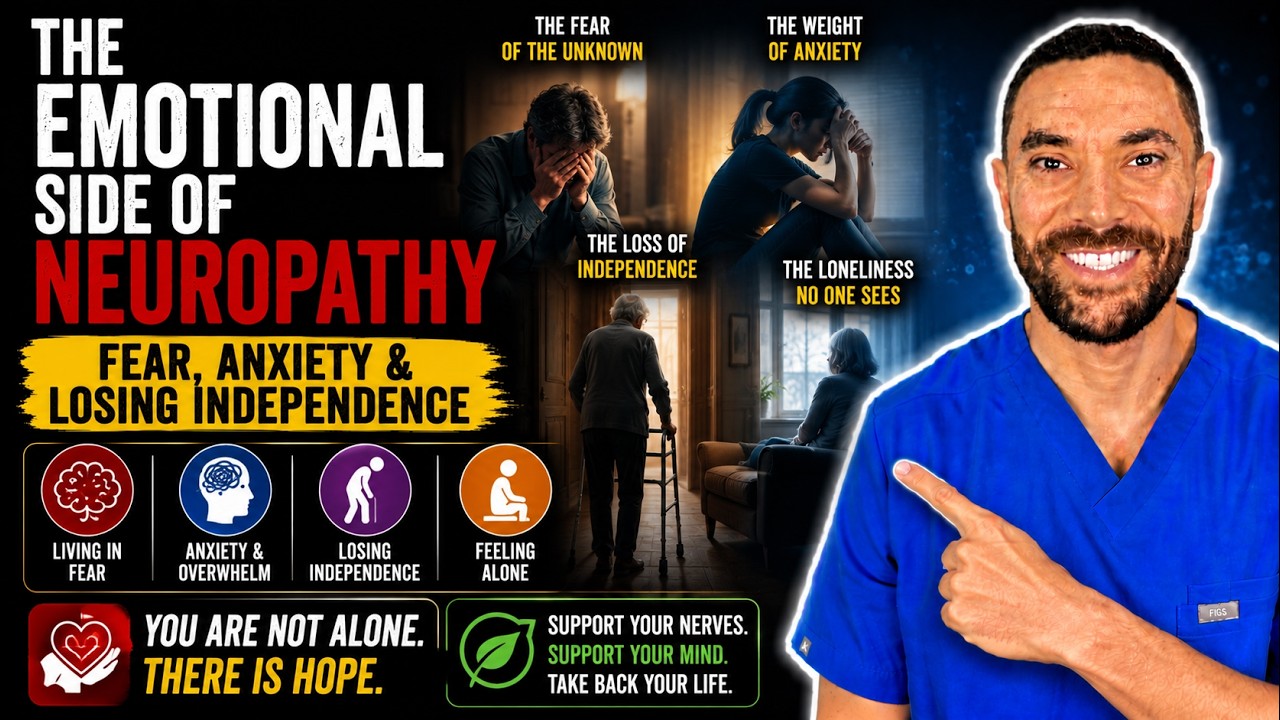
Short answer: for many people the hardest part of neuropathy is not the numbness. It is the fear: of falling, of getting worse, of a wheelchair, of leaving home for a nursing home. Dr. Mohamed Karim, D.C., says anxiety is very common among his patients, nothing to be embarrassed about, and most often eased by understanding what is actually happening to the nerves.
What patients feel, and rarely say
Across two episodes, Dr. Karim lists the same emotions over and over:
- Frustration, often after seeing several doctors in different specialties without real answers.
- Anxiety and depression from trying the same things and not seeing change.
- Isolation. People pull back from friends and family so no one sees the pain or the struggle.
- Fear of amputation, of a wheelchair, of a nursing home, and of missing family events and vacations.
Many do not tell their families at all. Part of that is how most of us were raised to handle feelings. Part of it, he says, is a specific worry: if I admit how bad it is, they may move me into a home.
Why neuropathy breeds anxiety
Uncertainty. People do not know what comes next or how bad it will get. And mobility is freedom. Someone who once walked a four-hour tour of the Colosseum now has to sit every few minutes. Gardening needs breaks. When symptoms reach balance and walking, worry follows naturally.
Pain feeds the cycle through sleep. Tossing and waking every hour or two leads to the brain fog people describe: walking into a room and forgetting why, blanking on a familiar name. That in turn makes people want to stay home. Researchers who study painful neuropathy report the same connection: the worse the pain, the higher the levels of anxiety, depression and sleep trouble.
Why so many feel hopeless
Because they have been told there is nothing to be done, or that it is just age. Dr. Karim disagrees with the age explanation. The youngest person he has put through his protocol was 12. The oldest so far is 98. He has 80-year-olds in better shape than some 50-year-olds.
What helps
Focus on what you can control today. For him that comes down to three things:
- Keep moving. Being sedentary is where health declines fastest.
- Fix nutrition. Processed food, soda and chips feed the inflammation that stresses nerves. His clinic addresses this first.
- Protect sleep. Poor sleep means more fatigue, more naps and less of the activity that helps.
And use your people. Family may nag, he says, but they nag because they love you. Support systems help enormously.
The other thing that lowers fear is understanding. During his exams Dr. Karim explains each test as he goes. A balance test with eyes open and closed, for instance, shows people why they sway: the nerves in the feet report to the brain too slowly for it to correct in time. Once people see the mechanism, the problem stops feeling like a mystery and starts feeling like something with a plan.
Wanda’s fears
Wanda, who lets the clinic share her story, arrived with a list of them: a nursing home, a wheelchair, amputation like some of her friends had faced, and losing the house she had lived in for decades. She was using a walker and still falling, and her family had started talking about a wheelchair.
By the clinic’s measurements she improved about 30% in three months and about 70% by nine months. She moved from the walker to a cane, and by nine months she no longer needed the cane. The bigger change, in Dr. Karim’s telling, was that she started leaving the house again.
Watch the episodes
Three takeaways
- Anxiety is common with neuropathy, and it can be overcome.
- You are not alone. Lean on family and support groups.
- Understanding what is happening to your nerves reduces fear.
Ready to talk it through? Book a free consultation or read about neuropathy treatment in North Liberty. Related: told to live with neuropathy?
This article summarizes podcast episodes and is general information, not medical advice. If you are feeling hopeless or thinking about harming yourself, call or text 988 in the US. Research on pain, mood and sleep: Painful Diabetic Peripheral Neuropathy (PMC). See our medical disclaimer.
Free consultation
Talk to Dr. Karim about your symptoms
Iowa Wellness Center, 1395 Jordan St Unit C, North Liberty, IA. Patients come in from Iowa City, Coralville and Cedar Rapids.