SoftWave therapy explained: how it works, what it treats and what the FDA has cleared
Short answer: SoftWave is a brand of unfocused shockwave therapy. It uses an electrohydraulic spark inside a water chamber, the same basic technology as kidney-stone lithotripsy, to send sound waves 10 to 12 centimeters into tissue without damaging it. The aim is to calm inflammation, improve blood flow and prompt the body’s own repair. In the US the device is FDA-cleared for connective tissue activation, temporary relief of minor aches and pains with increased local blood flow, diabetic foot ulcers and second-degree burns.
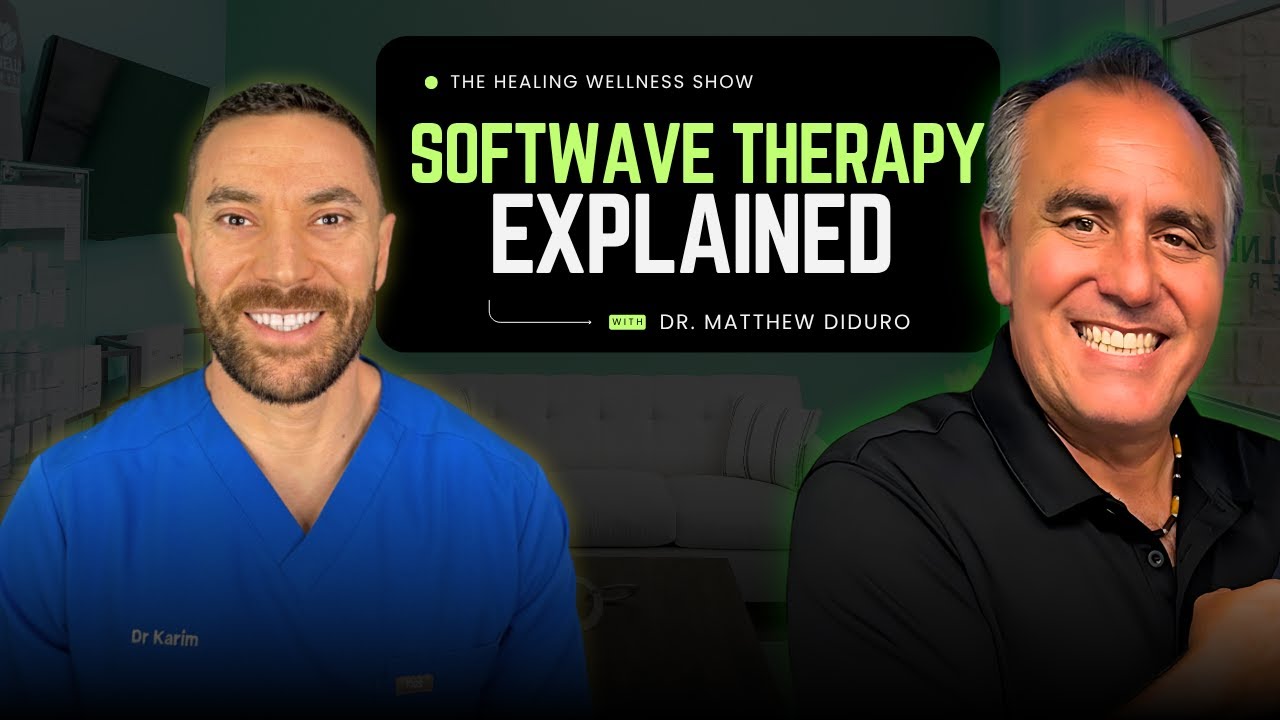
Dr. Mohamed Karim, D.C., talked with Dr. Matthew DiDuro, a chiropractor for 31 years, founder of the Atlanta Pain Institute, and one of the people who brought SoftWave to chiropractic offices in 2017. He now trains other clinics on it.
His own reason for trying it
In 2006 a 350-pound patient fell off his table. Dr. DiDuro caught him, dislocated his shoulder, tore the labrum and injured his wrist. Two surgeries later, the shoulder recovered but the wrist stayed at a constant 5 out of 10 for a decade. He could not adjust patients, ride a bike or swing a golf club. Cortisone did not help.
His first SoftWave session on that wrist lasted about three minutes. He says the pain was gone for four days, and after three sessions he was about 90% better. That is one person’s story, told by someone who now sells the devices, but it is why he got involved.
How SoftWave differs from other shockwave devices
Shockwave devices generate energy in different ways. Radial or ballistic devices use a metal tip that strikes the skin, and energy spreads out close to the surface. SoftWave uses an electrohydraulic source and an unfocused wave designed to reach deeper while avoiding tissue trauma. The mechanism is called mechanotransduction: a mechanical signal that cells convert into a biological response, including activity from the immune cells that manage inflammation and repair.
If you are comparing clinics, ask which device they use and what it is cleared for. Not all shockwave is the same.
What it is used for
Dr. DiDuro’s shorthand is “anything ending in -itis,” meaning inflammation:
- Plantar fasciitis
- Hip bursitis
- Tennis and golfer’s elbow
- Carpal tunnel
- Arthritis, including knee pain in people told they need a replacement
- Non-healing fractures, shin splints and turf toe, which he calls some of his best-responding cases
- Kneecap tracking problems (chondromalacia patella)
Professional sports teams use it too. He describes working with several NFL, NBA and college programs.
SoftWave and neuropathy
Neuropathy is where Dr. DiDuro says he saw the biggest change in his own clinic. By his account, the average neuropathy patient there started at about an 8 out of 10 for pain and roughly halved it within two or three sessions, and adding SoftWave to his neuropathy protocol cut a typical course from 24 visits over three months to 12 visits over six weeks. His wife developed severe neuropathy during chemotherapy, which is part of why he focused on it.
Neuropathy is not one of SoftWave’s FDA-cleared indications, so treat those numbers as one clinic’s experience rather than established results. They are a reason to ask good questions, not a promise.
How it feels, and how many sessions
The device doubles as a diagnostic tool. As it moves over a problem area, tender spots light up as therapeutic discomfort. His rule: the more discomfort during treatment, the better the outcome tends to be. If the clinician cannot find any tender spots in the area, you are probably not a good candidate.
Many people notice a change within minutes. He is equally clear that healing takes time, and that people who respond after the first session tend to keep improving over the next few, because the effect builds. Most cases need a handful of sessions.
Who should not have it
- Pregnancy: never over the abdomen or fetal tissue
- Over an active tumor or cancer, because it increases blood supply to the area
- Over the left shoulder or chest of someone with a pacemaker or defibrillator
- Within about 21 days of a cortisone injection in the area
Smoking, heavy drinking, excess weight, diabetes and immune-suppressing medications can all slow healing. Sleep, exercise and good nutrition help it.
What we left out
In the interview Dr. DiDuro also discusses early research on dementia, concussion and cancer, and a stroke patient’s hand opening after one session. Those are not FDA-cleared uses and the evidence is early, so we have not summarized them here. You can hear his full comments in the episode.
Watch the full interview
Curious whether acoustic wave therapy fits your pain or neuropathy? Book a free consultation with Dr. Karim’s team in North Liberty. Related: shockwave therapy explained and neuropathy treatment.
This article summarizes a podcast interview and is general information, not medical advice. The guest trains clinics on and sells SoftWave devices. Patient stories are individual reports; results vary. FDA clearance details: SoftWave TRT FAQ and BioWorld. See our medical disclaimer.
Free consultation
Talk to Dr. Karim about your symptoms
Iowa Wellness Center, 1395 Jordan St Unit C, North Liberty, IA. Patients come in from Iowa City, Coralville and Cedar Rapids.