Shockwave therapy explained: what it treats, how it feels and how many sessions it takes
Short answer: shockwave therapy sends focused sound waves deep into tendons, ligaments and other soft tissue to break up scar tissue, calm inflammation and prompt the body to repair the area. It is non-invasive, there is little to no downtime, and most people need about three to six weekly sessions. In the US it is FDA-approved for chronic plantar fasciitis and tennis elbow, and clinics use it for many other stubborn soft tissue problems.
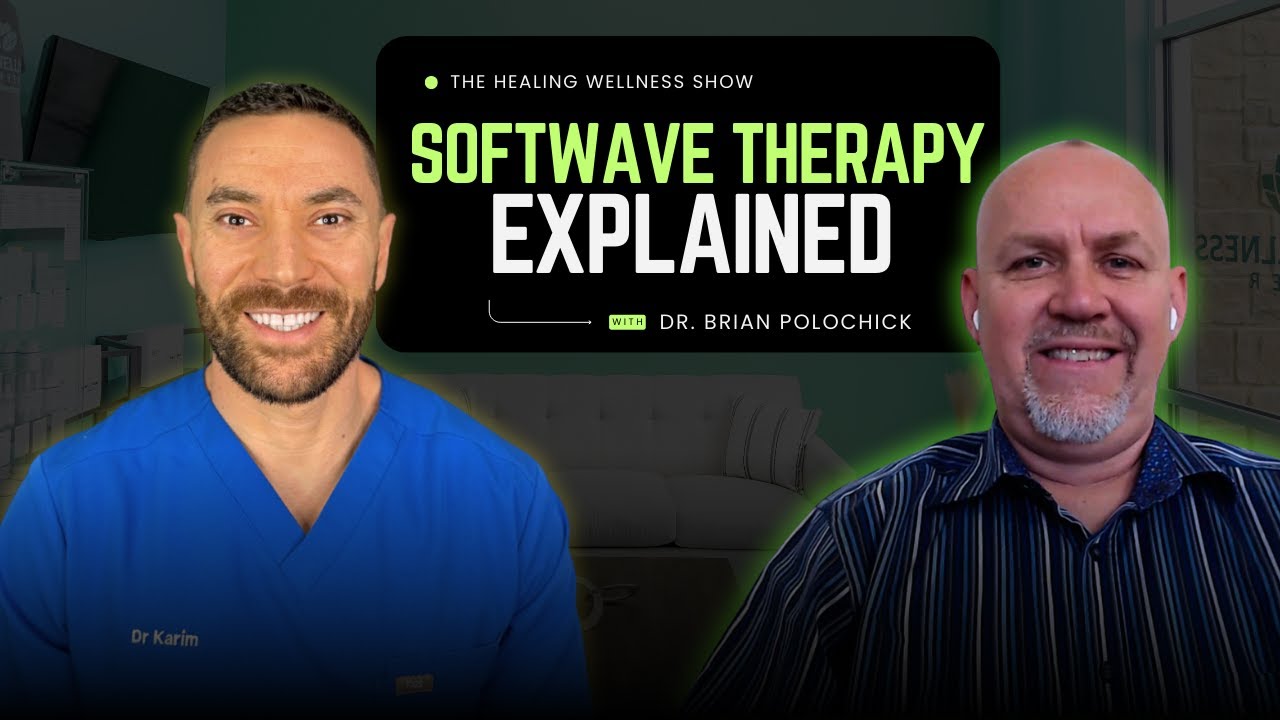
Dr. Mohamed Karim, D.C., who offers shockwave at his North Liberty clinic, sat down with Dr. Brian Polochick, a second-generation chiropractor in New England with 28 years in practice and a member of the American Society for Medical Shockwave Therapy.
How he came to it
Dr. Brian hurt his knee showing off on a trampoline in front of his kids, probably the meniscus. Adjustments and electric stim did not fix it. A year later an orthopedic friend mentioned shockwave, so he drove to a chiropractor near Boston for a few sessions. He says he walked out of the first one noticeably better and decided on the spot that his own office needed a machine.
Where it came from
Shockwave grew out of lithotripsy, the technique used to break up kidney stones with sound waves. Doctors noticed that patients’ surrounding soft tissue, hip flexors included, seemed to improve, and researchers began fine-tuning lower-energy versions for tendons and ligaments. It has been used for years in Europe and is still less common in the US.
What it does, in plain English
Dr. Brian calls it a soft tissue rejuvenator. The waves reach several inches into tissue that surface treatments cannot, where they are thought to break up scar tissue, improve blood flow and draw the body’s own repair cells to the area. It does not create stem cells. It encourages them to show up.
He is careful to say it is not a cure-all. It often works best alongside other care, and it is not a massage gun, which only loosens surface muscle.
Conditions he treats most
- Plantar fasciitis
- Knee problems, including meniscus injuries
- Shoulder bursitis and rotator cuff problems. He finds the biceps tendon is behind about half of chronic shoulder complaints he sees.
- Hip bursitis and related sciatic irritation
- Elbow, wrist and foot problems, including tennis elbow and Morton’s neuroma
- Tendon and ligament pain after a joint replacement
A few cases stuck with him. A young firefighter three years out from ACL and meniscus surgery, who could not squat or even tolerate blankets on his knee, bent down fully after one 20-minute session. A rock climber and guitarist whose hands, elbows and shoulders had ended both hobbies went back to setting climbing routes. A patient with a slow-healing foot fracture had a foot that was purple and cold, and after three visits, he says, the color returned.
What to expect, week by week
- First visit: history, exam and any imaging you already have, then a trial session.
- Sessions are about once a week, to give tissue time to repair.
- Many people notice 20 to 30% improvement in the first week, and 50 to 70% by three to six sessions, in his experience.
- Some feel little during treatment and improve four to six weeks after the last session, as the body finishes repairing.
- Tougher cases take longer. His longest was about 15 sessions for an old hockey fracture that had never healed.
How fast you respond depends on how long the problem has been there, how much scar tissue has built up (he compares it to peeling layers off an onion) and your overall health. Excess weight, insulin resistance, poor sleep and inflammation all slow healing.
Does it hurt?
There is discomfort, and he treats it as useful. When the wave hits the problem spot you feel pressure build, which tells the clinician exactly where to work. He aims for about a 5 or 6 out of 10 and adjusts the setting. It stops the moment the machine turns off, and over a few sessions people usually tolerate higher settings as the area improves.
Who should not have it
- An active infection in the treatment area
- Cancer in the treatment area
- Pacemakers or nerve stimulators
- Over the lungs or other air-filled areas
- Blood thinners call for lighter settings because of bruising
He notes that guidance has loosened in two areas he was taught were off-limits: teenagers, because low settings do not appear to affect growth plates, and joint replacements, since sound waves do not heat metal.
Between sessions
Treat it like a hard workout: water with electrolytes, some ice if it is sore, and foods that help repair tissue. His biggest warning is overdoing it. People who have been restricted for years feel better, go straight back to full activity and aggravate the area again.
Shockwave, injections or surgery?
His rule is to start with the least invasive option. Cortisone can numb pain without fixing the tissue, and pain that has been masked can make it easier to injure the area further. For people already heading to surgery, he says some European surgeons use shockwave before and after the operation.
Cost and insurance
Health insurance generally does not cover shockwave for musculoskeletal pain, and many insurers still classify it as investigational. HSA and FSA funds can usually be used at a doctor’s office. Ask any clinic for its pricing and package options up front.
Watch the full interview
Dr. Karim’s clinic in North Liberty offers shockwave. Book a free consultation to see whether you are a good candidate. Related: SoftWave therapy explained and neuropathy treatment in North Liberty.
This article summarizes a podcast interview and is general information, not medical advice. Case stories are individual experiences reported by the guest; results vary. FDA approval covers specific devices for chronic plantar fasciitis and lateral epicondylitis; other uses are off-label. See our medical disclaimer.
Free consultation
Talk to Dr. Karim about your symptoms
Iowa Wellness Center, 1395 Jordan St Unit C, North Liberty, IA. Patients come in from Iowa City, Coralville and Cedar Rapids.