
Why losing weight gets harder with age, and why calories are not the whole answer
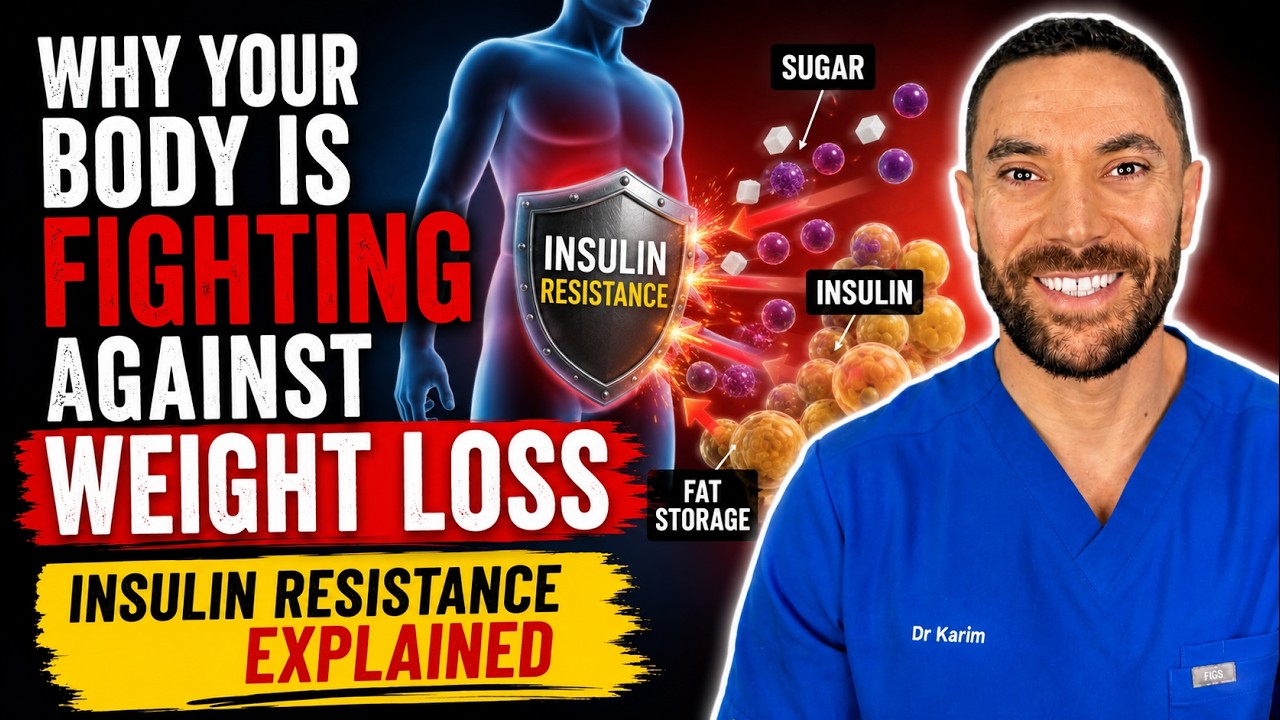
Short answer: weight loss gets harder in your 40s and 50s mostly because of what changes around your metabolism, not the metabolism itself. Muscle mass drops, hormones shift, sleep gets worse, stress climbs and inflammation builds. Dr. Mohamed Karim, D.C., says calories alone rarely explain it, and research backs him up on that part.
What his patients describe
In your 20s you can eat nearly anything. By your 40s and 50s the same habits start showing up around the middle. Men notice the belly and some chest fat. Women notice mood swings and weight that will not move. Both describe being tired after meals and wanting a nap mid-afternoon.
A twist from the research
A large 2021 study in the journal Science measured daily energy use in about 6,400 people aged 8 days to 95 years. It found that, adjusted for body size, metabolism stays steady from roughly 20 to 60 and only starts to decline after 60, by about 0.7% a year.
So the classic “middle-age spread” is mostly not a slowing engine. It is the other things that change in those decades, which is exactly where Dr. Karim looks.
What actually changes
- Muscle. People lose muscle as they age unless they work to keep it, and muscle burns more energy than fat.
- Hormones. Testosterone and estrogen shift in both men and women. In men, higher relative estrogen can show up as chest and belly fat.
- Sleep. Tossing, waking and bathroom trips break up deep sleep.
- Stress, which raises inflammation.
- Gut health, which in his view drives much of that inflammation.
On hormones, he makes a point many patients have not heard: a lab result can come back “normal” because it sits within the typical range for your age group, which is not the same as the level where you feel and function best. That is a conversation worth having with whoever orders your bloodwork.
Why calories are not the whole answer
“Weight loss isn’t math,” he says. People tell him they eat 1,800 or 2,000 calories a day and still cannot lose weight. Others eat only one or two big meals a day, thinking less food must mean less weight.
His explanation for the second group is that the body reads long gaps as a shortage and holds onto fat as backup energy. When his patients shift to smaller meals spread through the day, alongside gut work that brings down inflammation, he sees their bodies start letting go of stored fat.
Signs your metabolism needs attention
- Fatigue, especially after meals
- Weight gathering around the belly
- Brain fog and memory slips
- Sugar or salt cravings
- Poor sleep
The biggest mistake he sees
Exercising six or seven days a week while the diet stays the same. Food is his number one. Many people he sees eat plenty of fat and carbohydrate but too little protein, which is backwards if you want to keep muscle while losing fat. Combine that with one or two meals a day and heavy exercise, and the body is underfed and overworked at once.
His order of priorities never changes: food first, exercise second, sleep third.
Watch the episode
Doing everything right and still stuck? Read about medical weight loss in North Liberty and hormone testing, or book a free consultation. Related: how your gut can block weight loss.
This article summarizes a podcast episode and is general information, not medical advice. Talk to your doctor before major diet, exercise or hormone changes. Metabolism research: Pontzer et al., Science, 2021. See our medical disclaimer.
Free consultation
Talk to Dr. Karim about your symptoms
Iowa Wellness Center, 1395 Jordan St Unit C, North Liberty, IA. Patients come in from Iowa City, Coralville and Cedar Rapids.