Three neuropathy myths that keep people waiting too long
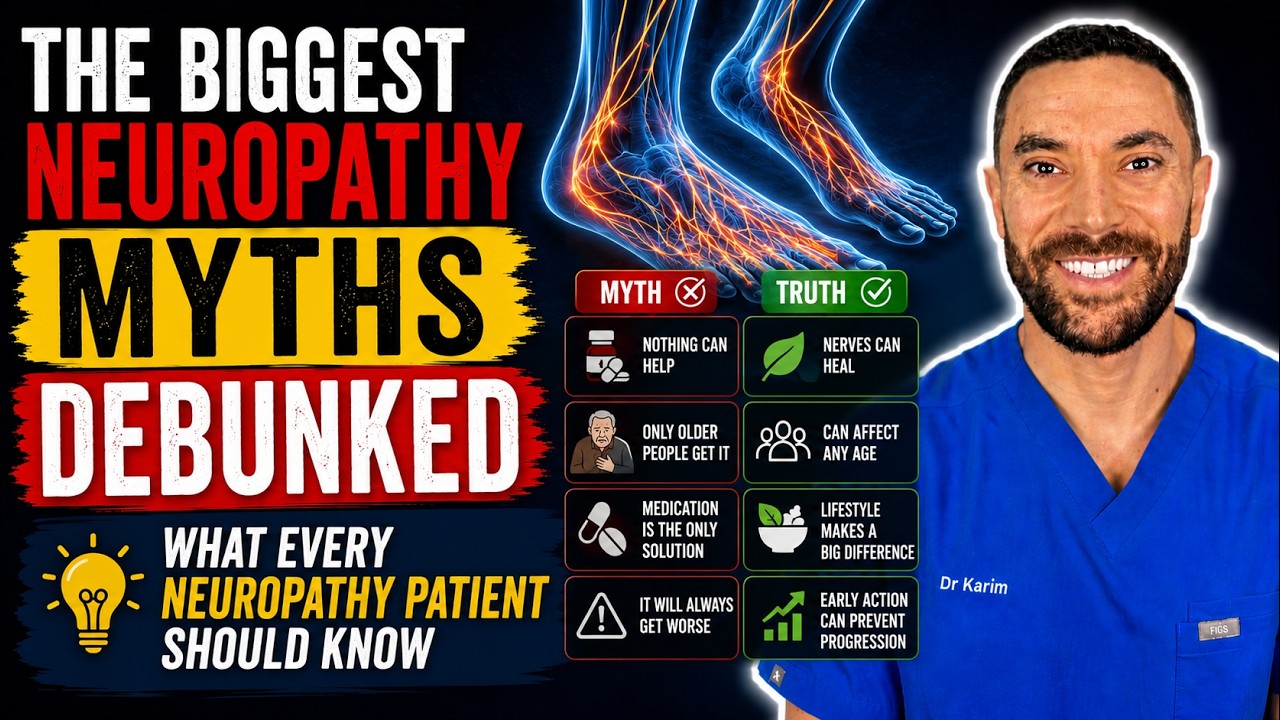
Short answer: the three neuropathy myths Dr. Mohamed Karim, D.C., hears most in North Liberty are that only diabetics get it, that tingling is nothing to worry about, and that less pain means the nerves are healing. All three keep people waiting while the nerves get worse.
Myth 1: only people with diabetes get neuropathy
Diabetes is the most common cause. The National Institute of Diabetes and Digestive and Kidney Diseases estimates that up to half of people with diabetes develop peripheral neuropathy. But it is far from the only cause.
The list Dr. Karim sees in his clinic is long:
- Chemotherapy (chemotherapy-induced neuropathy)
- Lyme disease
- Autoimmune conditions
- Metabolic problems and chronic inflammation
- Poor circulation
- Surgery
- Medications, several of which are known to damage nerves
Plenty of people with burning or numb feet never get checked because they do not have diabetes and assume it cannot be neuropathy. It can.
Myth 2: tingling is not serious
Dr. Karim compares tingling to the yellow warning light on a dashboard. It is early. It is also a sign the nerves are under stress. Cover up the yellow light and eventually you get the red one, and if you ignore that too, the car stops running.
Tingling is the stage where there is the most nerve left to work with.
Myth 3: if the medication helps the pain, the nerves are healing
This is the one he pushes back on hardest. Less pain does not necessarily mean the nerve is recovering. In his view many neuropathy medications quiet the signal rather than repair the nerve, and he describes a pattern he sees again and again: someone starts gabapentin at a low dose and feels better for a few months. The pain creeps back. The dose goes up. It works for a while, then goes up again, until the person is at a high dose or switched to a similar drug, and by the time they reach his clinic the medication has stopped helping.
His argument is that turning down nerve activity does nothing for the nerve’s blood supply or its environment, so the underlying damage keeps progressing underneath the relief.
That is his clinical view, and it is worth discussing with whoever prescribes your medication. Do not stop or change a prescription on your own.
What does work, in his experience
The patients who do best, he says, combine several things at once: stimulating the nerve, improving circulation and oxygen delivery, working on metabolic health, and bringing down inflammation. His clinic’s Relief Protocol is built around those pieces rather than around a single symptom.
Watch the episode
Told it cannot be neuropathy because you are not diabetic? Book a free consultation or read how neuropathy treatment in North Liberty works. Related: why neuropathy keeps getting worse.
This article summarizes a podcast episode and is general information, not medical advice. Never stop or change a prescribed medication without talking to your prescriber. Diabetes statistic: NIDDK, Peripheral Neuropathy. See our medical disclaimer.
Free consultation
Talk to Dr. Karim about your symptoms
Iowa Wellness Center, 1395 Jordan St Unit C, North Liberty, IA. Patients come in from Iowa City, Coralville and Cedar Rapids.