Scoliosis explained: signs to watch for, bracing and non-surgical treatment
Short answer: scoliosis is a sideways curve of the spine with rotation, diagnosed when an X-ray shows at least 10 degrees of curvature. The most common type, idiopathic scoliosis, shows up during growth spurts in children and teens. Catching it early matters: smaller curves in kids who are still growing respond best to treatment, which usually means bracing plus scoliosis-specific exercise, with surgery reserved for large or fast-progressing curves.
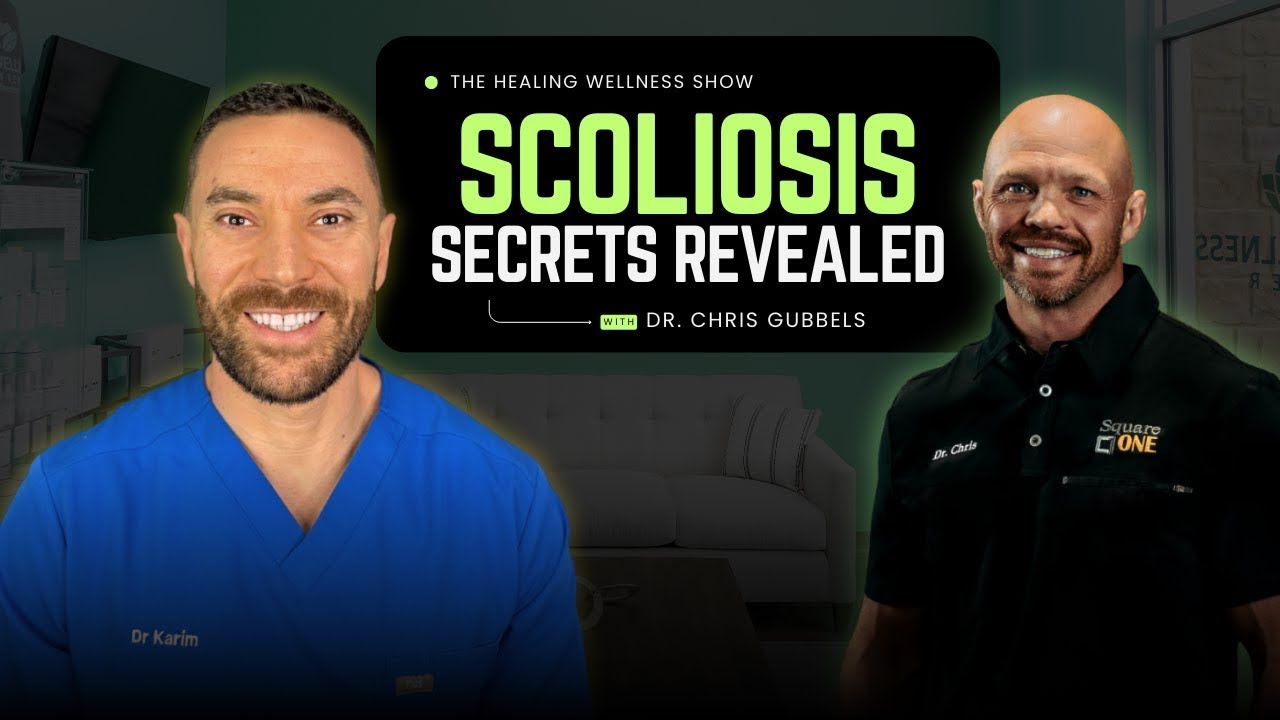
Dr. Mohamed Karim, D.C., spoke with Dr. Chris Gubbels, a chiropractor with about 18 years in practice who now works exclusively with scoliosis patients at ScoliCare in Denver, a clinic that combines custom bracing with scoliosis-specific rehabilitation.
Signs parents should look for
Children and teens often have little or no pain, so parents sometimes assume nothing is wrong. Look for asymmetry instead:
- One shoulder higher than the other
- A waist that is flat on one side and indented on the other
- A hump in the rib cage or low back when they bend forward
- One shoulder blade sticking out more
- A belt line or waistband that sits unevenly
If one side looks different from the other, ask for an X-ray. That is how scoliosis is confirmed and measured.
Why “watch and wait” worries him
Curves often grow during growth spurts, and all big curves start as small ones. Standard orthopedic guidance typically recommends bracing for curves between about 25 and 40 degrees, and Dr. Gubbels would like to see treatment start earlier in the right cases. His motto: stay ahead of the curve.
Bracing works. In a large clinical trial published in the New England Journal of Medicine, teens who wore a brace were significantly less likely to see their curve progress to the point of needing surgery than those who were only watched, and the more hours a day they wore it, the better they did. Where clinics differ is in brace design and how much correction they aim for, not whether bracing helps.
How his clinic approaches it
- Custom 3D-designed braces that move the spine toward the opposite, corrective position rather than simply holding it like a cast. How much the curve improves with the brace on is one of the best predictors of how well bracing will work.
- Scoliosis-specific exercise, which teaches the patient to put their own spine in its best position and strengthen it there, including during everyday activities. This differs from general physical therapy.
- For small or low-risk curves, or kids who will not wear a brace, exercise alone.
How much correction is possible depends on curve size and how much growing is left. In his experience, reductions of 50 to 75% happen in some growing kids; teens near the end of growth see less change, and the goals shift.
Why the size at the end of growth matters
The curve’s size when a teen stops growing predicts adulthood. Curves above about 30 degrees carry a higher risk of slowly progressing through adult life, and curves above about 50 degrees very often do. That is why his team thinks beyond “avoid surgery during the teen years” and aims for the smallest possible curve at skeletal maturity. Very young children, roughly 3 to 10, are flexible and respond quickly, but their curves can return during later growth spurts, so they are watched closely.
Scoliosis in adults
Adult goals are different: reduce pain, stop or slow progression, and protect quality of life. Bone that has already grown misshapen cannot be reshaped, but posture that has collapsed into the curve often can be improved. He says spine surgeons who treat adults refer to him because surgery outcomes in older patients can be mixed, and the best surgeons try conservative care first.
Very large curves, around 70 to 80 degrees, can start to affect breathing and the heart. Separately, a stooped, hunched-forward posture in older adults (hyperkyphosis) has been linked in research to falls, loss of independence and higher mortality, which is why posture is worth addressing at any age.
Two cases that stayed with him
A woman left paralyzed after surgery on a blood-vessel lesion was collapsing forward even in her wheelchair. His team designed a custom brace, scanned her own chair, and she was preparing for a trip to Florida she had not expected to take again. And an 8-year-old girl with an autoimmune neuropathy whose spine was collapsing wore a brace to take pressure off her nerves; her neurologist is now tracking improvement in her leg nerves alongside her other care.
Three things to know
- Screening checks can miss scoliosis. If you notice asymmetry, ask for an X-ray.
- Opinions differ between clinics. Ask about curve size, growth remaining, brace type and exercise, and get a second opinion if you are unsure.
- Early, consistent treatment gives the best odds, especially while a child is still growing.
Watch the full interview
Questions about a curve or posture? Book a free consultation in North Liberty. Related: degenerative disc disease explained.
This article summarizes a podcast interview and is general information, not medical advice. Bracing evidence: Weinstein et al., Effects of Bracing in Adolescents with Idiopathic Scoliosis, NEJM 2013. See our medical disclaimer.
Free consultation
Talk to Dr. Karim about your symptoms
Iowa Wellness Center, 1395 Jordan St Unit C, North Liberty, IA. Patients come in from Iowa City, Coralville and Cedar Rapids.