Neurofeedback explained: how brain training works and what the research shows
Short answer: neurofeedback is brain training that uses your own brainwaves. A quantitative EEG, or “brain map,” first measures whether different brainwaves are running too fast or too slow. Then, during sessions, you watch a show while sensors read your brain activity, and the screen flickers whenever your brainwaves drift out of the target range. Over time the brain learns to stay in range. Nothing is put into your body; the sensors only read. Clinics use it for focus, sleep, stress, brain fog and more, and research support varies by condition.
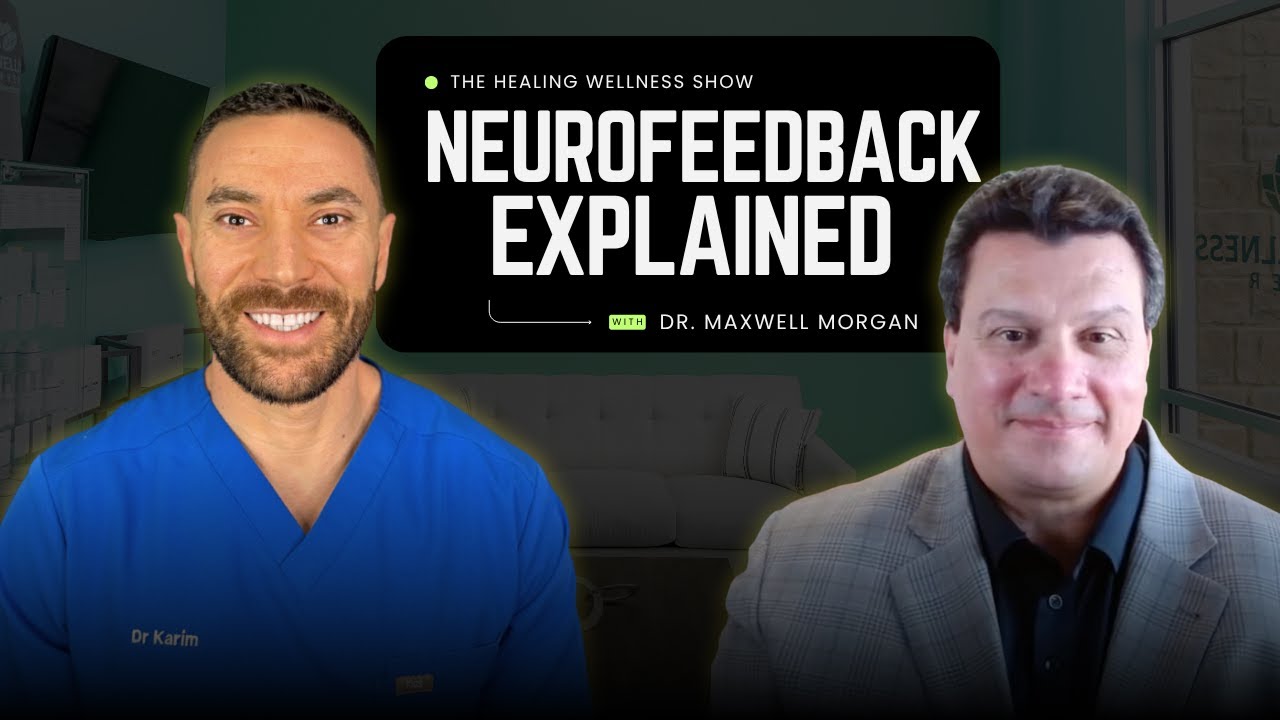
Dr. Mohamed Karim, D.C., whose North Liberty clinic offers neurofeedback, spoke with Dr. Chris Steiner, a chiropractor board-certified in integrative medicine with 26 years in practice at the Exceptional Life Center, where neurofeedback is a core service. He was also one of his own first neurofeedback patients, as a former ADD kid.
The Goldilocks idea
Dr. Steiner explains it with Goldilocks and the three bears. Some brainwaves run too hot, some too cold, and the goal is just right. The brain map shows which is which, and also whether the two sides of the brain are communicating in balance.
The four brainwaves, simply
- Delta, the slowest, tied closely to sleep. He often sees it running too high in people who cannot sleep, and his point is simple: if you are not sleeping, you are not healing.
- Theta, linked to focus and attention, often out of balance with attention problems.
- Alpha, linked largely to emotional regulation, and often high or low with anxiety and low mood.
- Beta, the fastest and widest band, which he considers the most important, tied to executive function: thinking, planning and getting cognitive work done.
What a visit looks like
- An hour-long consultation with a full neurological exam: sensation, balance, coordination and brain function.
- If it looks like a good fit, the brain map. A cap with conductive gel goes on your head, so plan on messy hair.
- A results visit explaining what the map shows.
- Training sessions, usually two or three times a week. You pick a show, sensors go on your forehead or elsewhere, and some clinics add light-frequency glasses.
- A follow-up brain map around session 20, or sooner if progress stalls.
A session feels like nothing more than watching TV. The first two are shorter, about 10 to 12 minutes, because the brain is a hungry organ and people can feel tired afterward, a bit like after a long exam. Eat well around your sessions.
Who it is used for
In his practice: brain fog, trouble focusing, balance problems, sleep problems, ADHD in children and adults, concussion recovery, anxiety and low mood, seizures and people with early memory problems. Athletes and executives use it to sharpen performance.
He tells stories from both ends of that range: a teenager with frequent daily seizures whose family moved states for three months of care and who, he says, has been seizure-free for years, and a man who had part of his brain removed as a young adult and regained enough use of his hands to become a working ceramic artist. Those are his reports of individual patients.
He is also clear about limits. If anxiety is mainly emotional rather than neurological, a psychologist may help more, and he refers out when he does not think he can help enough.
What the research says
Neurofeedback is non-invasive and generally well tolerated, but “no side effects” overstates it: some people feel tired, and a few report headaches or feeling wired after sessions. People taking benzodiazepines should involve their prescriber first. Light-based stimulation is avoided for people with seizures.
Evidence is mixed. ADHD is the most studied use. Some reviews support specific standard protocols, but several well-controlled meta-analyses found the benefit shrank or disappeared when the people rating symptoms did not know who got real training. Research on sleep, anxiety, concussion and other uses is earlier. That does not mean it will not help you. It means a good clinic should measure your progress and tell you honestly if it is not working.
Quick answers from the episode
- Does it shock the brain? No. The sensors only read activity.
- Do all systems work the same? No. Professional systems differ from consumer devices sold online.
- Can kids do it? Yes. Young brains adapt quickly, and he treats many children.
- Is there a home option? Yes, with office brain maps every couple of months. Home training usually needs more sessions.
- Do I stop my medications? Only with your prescriber’s guidance.
Watch the full interview
Dr. Karim’s clinic in North Liberty offers brain mapping and neurofeedback. Book a free consultation. Related: neuropathy and brain fog.
This article summarizes a podcast interview and is general information, not medical advice. Neurofeedback does not replace emergency or mental health crisis care; if you are in crisis in the US, call or text 988. ADHD evidence: Cortese et al., JAACAP 2016 and Enriquez-Geppert et al., 2019. See our medical disclaimer.
Free consultation
Talk to Dr. Karim about your symptoms
Iowa Wellness Center, 1395 Jordan St Unit C, North Liberty, IA. Patients come in from Iowa City, Coralville and Cedar Rapids.