The neuropathy symptom you might not feel, and why to check your feet every night
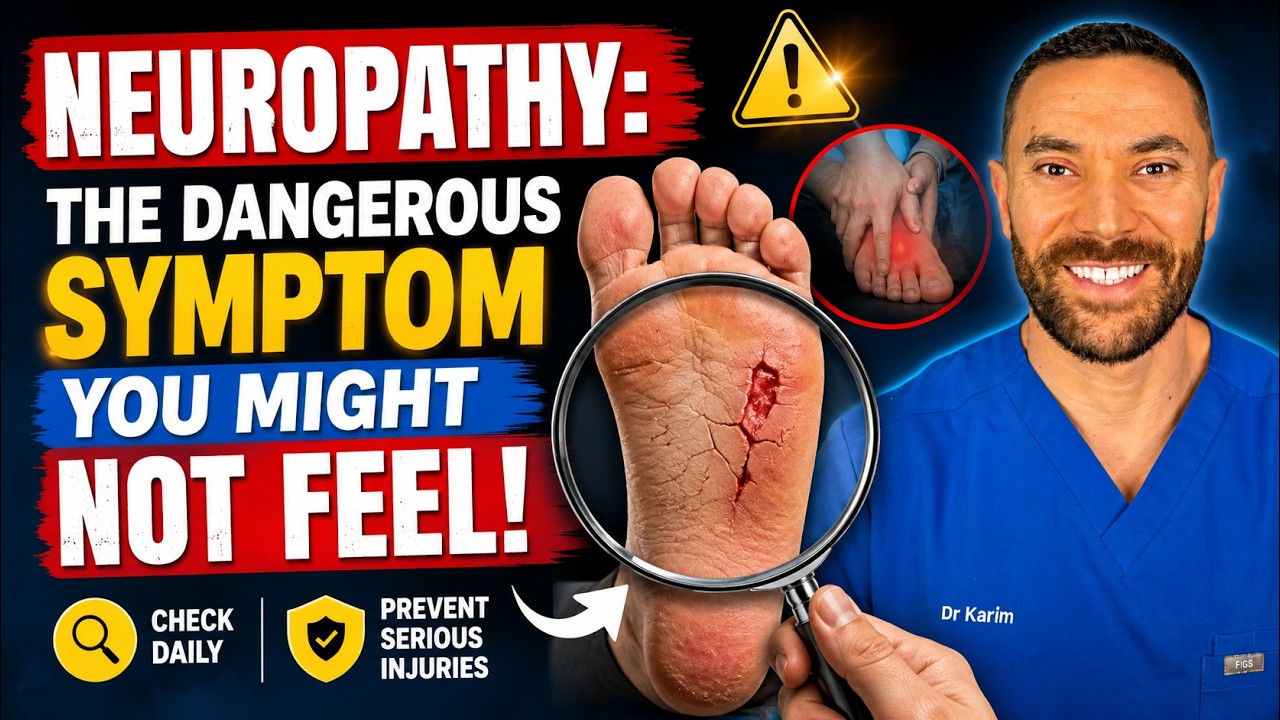
Short answer: the most dangerous neuropathy symptom is the injury you do not feel. A cut, blister or splinter on a numb foot can go unnoticed for days, and because circulation to the feet is often reduced too, it heals slowly and can become infected. Dr. Mohamed Karim, D.C., asks every neuropathy patient to check their feet every single night before bed.
Why a small cut becomes a big problem
Normally a cut announces itself. You bang your foot, it hurts, you look down and see blood. Without that pain signal, you keep walking.
Dr. Karim explains the second half of the problem this way: nerves and circulation go hand in hand. The feet are the farthest point from the heart, and when the nerves there stop firing as they should, blood flow to the area tends to drop as well. Healing needs oxygen and nutrients carried by the blood. A wound on a foot with poor circulation heals slowly, infection has time to set in, and in the worst cases gangrene follows.
That is the path he has watched patients take: a toe, then a foot, then part of a leg.
The American Diabetes Association says much the same in its patient guidance: most amputations can be prevented with daily foot checks, regular visits with a doctor and proper footwear.
Injuries people with neuropathy miss
- Cuts and scrapes
- Burns and blisters from bath water, a heating pad or a hot floor you could not feel
- Pressure sores from shoes
- Cracks in the skin of the heels
- Splinters
- Something inside the shoe, like a nail coming through the sole, reopening the same wound with every step
Three stories from the clinic
Bob worked construction. He dropped his toolbox on his foot, felt nothing, and thought no more of it. It happened to be the day of his first exam. When Dr. Karim asked him to take off his shoes, his socks were soaked red and there was bone showing. Dr. Karim sent him straight to the ER and still does not know how he was walking.
Another patient broke a glass, cleaned it up, and did not notice that a small piece had landed in a shoe. She kept walking on it, collecting new cuts, until she did her nightly foot check and found the shard.
A third was doing arts and crafts with her shoes off. A tack fell into one of them. She wore it all day and only found out in the shower, when she saw blood running and could not tell where it was coming from.
“I wear shoes, so why check?” is a question he hears often. These three are his answer.
How to check your feet
Do it every night before bed, when the day’s walking is done. If you work in a shed, a barn or a shop, check again when you come in. Look at:
- The tops and soles of both feet
- Between every toe
- Heels and the edges of the feet
- Your lower legs
If you cannot see your soles comfortably, use an unbreakable mirror on the floor or ask someone in the house to look. The ADA recommends exactly that for people who have lost sensation. Shake out your shoes before you put them on.
When to get it seen the same day
- Redness around a wound, or skin that feels hot to the touch
- A wound that is draining
- Skin breaking down around an area
- New discoloration, or bruising that appears easily
- A new pressure spot or sore
Dr. Karim’s view is firm: if you have neuropathy, do not wait to see whether a wound heals on its own. Even a small one.
Shoes are not a small detail
Poorly fitted or unsupportive shoes are one of the biggest mistakes he sees. Tight shoes restrict blood flow to feet that already get too little. Unsupportive ones make trips and falls more likely. He sends many patients to a provider who does foot scans for custom orthotics or custom shoes.
Why people put this off
Some do not want to make a fuss in front of family. Some, more often men in his experience, would rather tough it out than see a doctor. And some have felt numb for so long that it now seems like just how their feet are. Numbness, tingling, burning, not telling hot from cold, not telling carpet from tile: none of those are normal, however familiar they have become.
Watch the full episode
Three takeaways
- What you do not feel can still hurt you.
- A nightly foot check takes two minutes and catches problems early.
- Proper footwear matters every day.
Already finding marks on your feet you did not feel happen? Book a free consultation or read how neuropathy treatment in North Liberty works. Related: why walking in the dark is so hard with neuropathy.
This article summarizes a podcast episode and is general information, not medical advice. Signs of spreading infection, fever, or a wound with exposed bone need urgent medical care. Source for foot-check guidance: American Diabetes Association, Foot Complications. See our medical disclaimer.
Free consultation
Talk to Dr. Karim about your symptoms
Iowa Wellness Center, 1395 Jordan St Unit C, North Liberty, IA. Patients come in from Iowa City, Coralville and Cedar Rapids.